
New Delhi old map
You can find on this page the New Delhi old map to print and to download in PDF. The New Delhi historical map and the vintage map of New Delhi present the past and evolutions of the city of New Delhi in India.
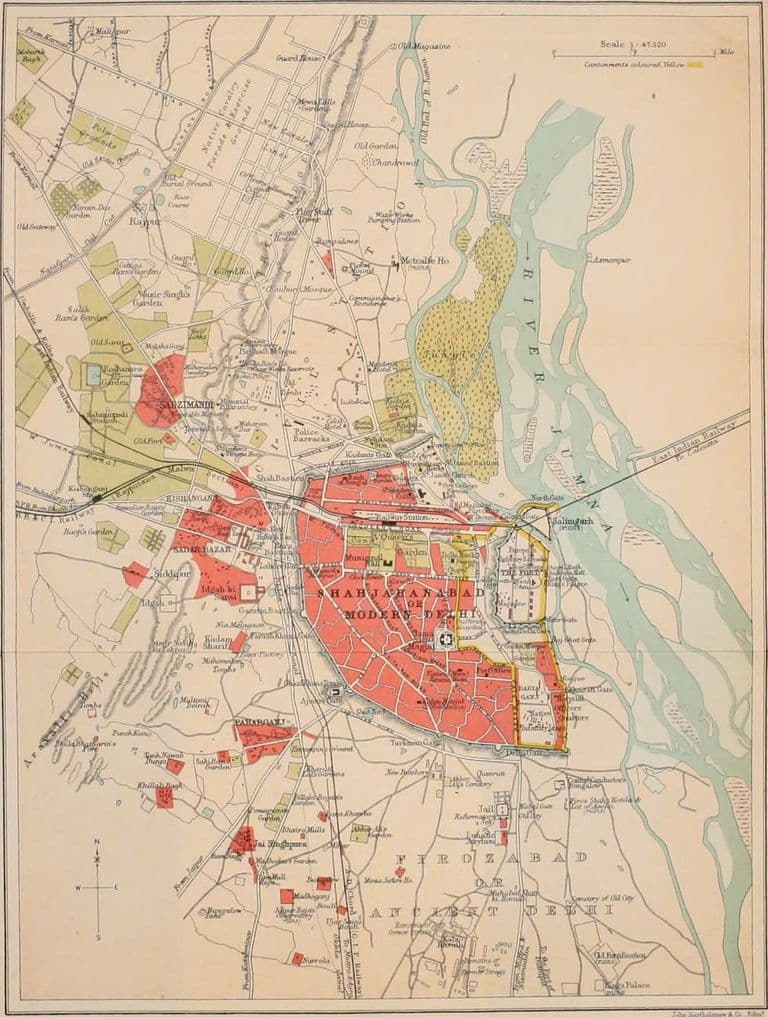
New Delhi historical map
The New Delhi old map shows evolutions of New Delhi city. This historical map of New Delhi will allow you to travel in the past and in the history of New Delhi in India. The New Delhi ancient map is downloadable in PDF, printable and free.
In 1966, an inscription of the Mauryan Emperor Ashoka (273-236 BC) was discovered near Srinivaspuri, which is near Noida. Two sandstone pillars inscribed with the edicts of Ashoka were brought to by Firuz Shah Tughluq in the 14th century as its shown in New Delhi historical map. The famous Iron pillar near the Qutub Minar was commissioned by the emperor Kumara Gupta I of the Gupta dynasty (320-540) and transplanted to Delhi during the 10th century. Eight major cities have been situated in the historical area of New Delhi. The first five cities were in the southern part of present-day Delhi. Though settlements have been dated to have been taking place in Delhi for millennia, there is no record to stand by that claim.
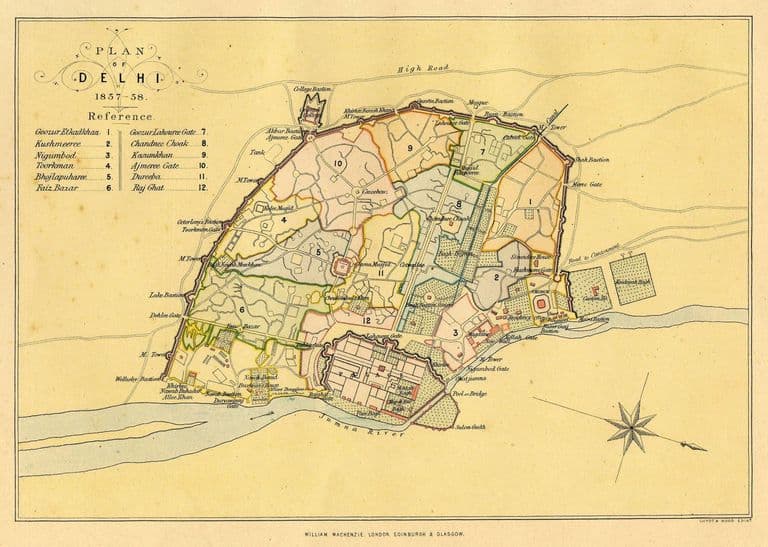
New Delhi vintage map
The New Delhi vintage map give a unique insight into the history and evolution of New Delhi city. This vintage map of New Delhi with its antique style will allow you to travel in the past of New Delhi in India. The New Delhi vintage map is downloadable in PDF, printable and free.
According to Indian folklore, New Delhi was the vintage site of the magnificent and opulent Indraprastha, capital of the Pandavas in the Indian epic Mahabharata, founded around 3500 BC. It was, one of the five prasthas or `plains’, which included Sonepat, Panipat, Pilpat, and Baghpat as you can see in New Delhi vintage map. 16th-century, Persian historian, Firishta, recorded a tradition that Delhi or Dilli was founded by a Raja Dhilu before the Macedonian (Greek) invasion of India, i.e. Indian campaign of Alexander the Great in 321 BC. Hindu texts state that the city of Delhi used to be referred to in Sanskrit as Hastinapur, which means “elephant-city”.