
VINTAGE New Delhi MAP
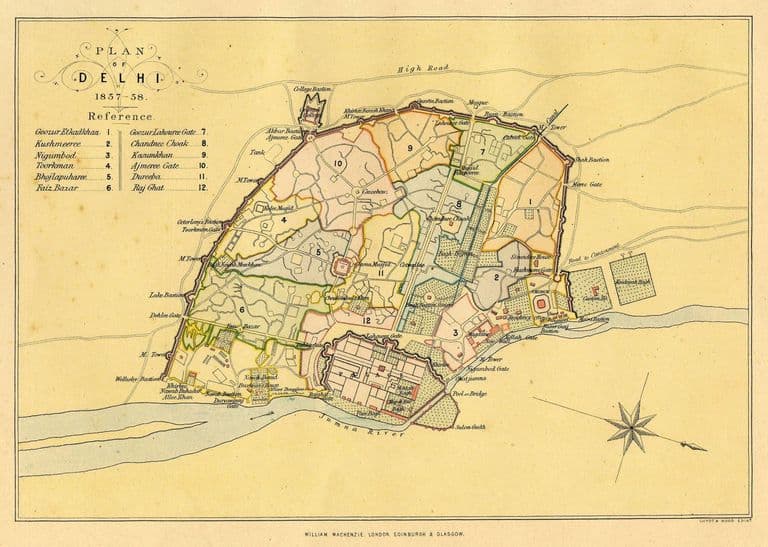
Click to enlarge
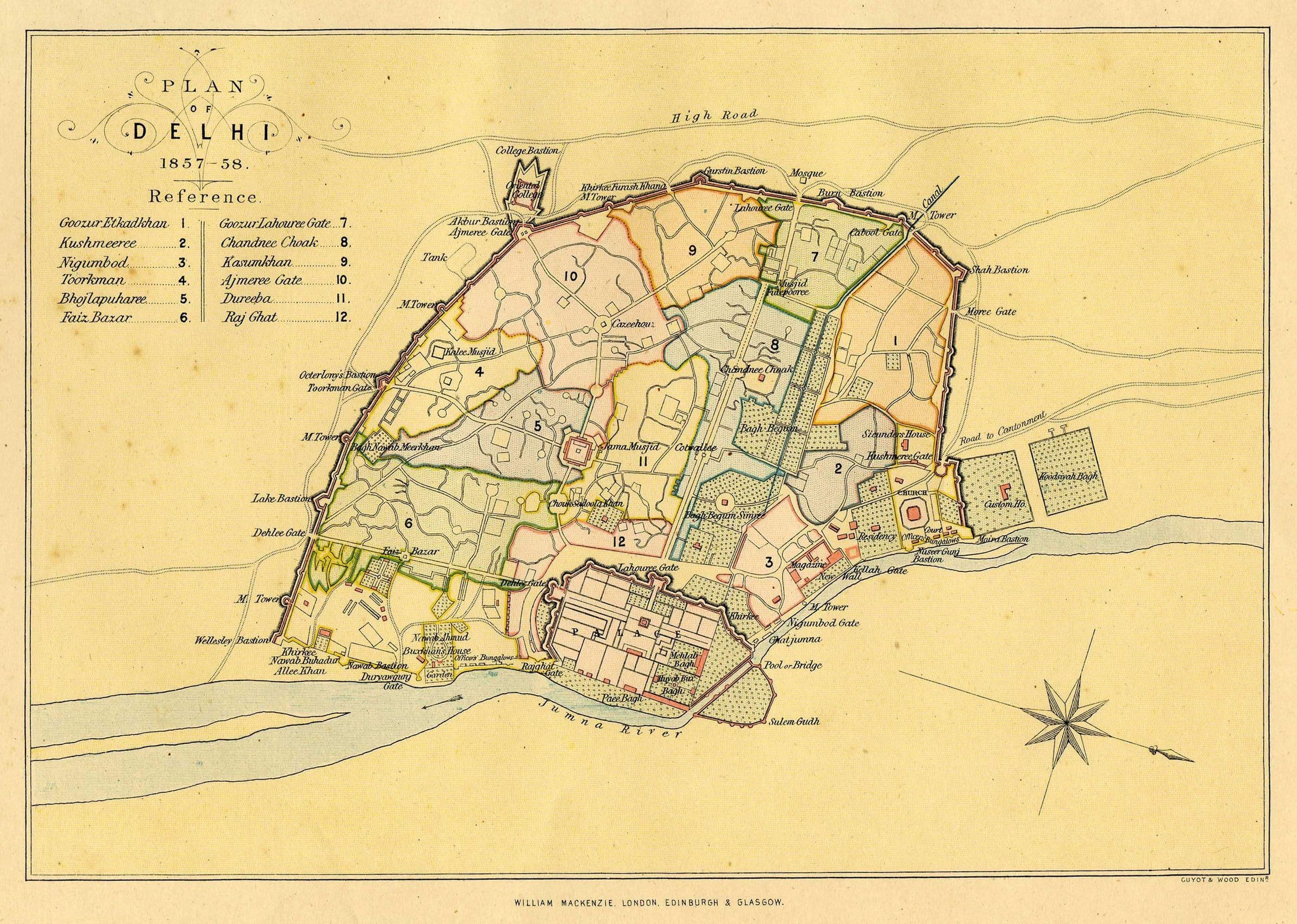
The New Delhi vintage map give a unique insight into the history and evolution of New Delhi city. This vintage map of New Delhi with its antique style will allow you to travel in the past of New Delhi in India. The New Delhi vintage map is downloadable in PDF, printable and free.
According to Indian folklore, New Delhi was the vintage site of the magnificent and opulent Indraprastha, capital of the Pandavas in the Indian epic Mahabharata, founded around 3500 BC. It was, one of the five prasthas or `plains’, which included Sonepat, Panipat, Pilpat, and Baghpat as you can see in New Delhi vintage map. 16th-century, Persian historian, Firishta, recorded a tradition that Delhi or Dilli was founded by a Raja Dhilu before the Macedonian (Greek) invasion of India, i.e. Indian campaign of Alexander the Great in 321 BC. Hindu texts state that the city of Delhi used to be referred to in Sanskrit as Hastinapur, which means “elephant-city”.
The name Delhi may be derived from the word ‘Dhillika’, though there are other theories as its shown in New Delhi vintage map. According to Satyarth Prakash (1874) of Swami Dayanand, Raja Dhilu (King Dihlu) founded ancient Delhi in 800 BC, however it is not supported by any older texts It was the name of the first medieval township of Delhi, located on the southwestern border of the present New Delhi, in Mehrauli. This was the first in the series of seven medieval cities. It is also known as Yoginipura, that is, the fortress of the yoginis (female divinities). It gained importance during the time of Ananga Pala Tomar. In the 12th century, the city was included in the dominions of Prithviraj Chauhan. Pasanaha Chariu of Vibudh Shridhar (VS 1189-1230) an Apabhramsha writer, provides the first reference to the legend of the origin of the name Dhilli for Delhi.
The Tomar dynasty founded Lal Kot in 736. The Prithviraj Raso names the Tomar Anangpal as the founder of Lal Kot, whose name is inscribed on Iron Pillar of Delhi at Qutb complex, ascribed to Chandra or Chandragupta II as you can see in New Delhi vintage map. A contemporary account of the city of Delhi in the Tomar period is given by Vibudh Shridhar. He describes an immense fort surrounded by a moat beside the Ananga lake. The markets were full of commodities like cloth, grain, betel-nuts, sweets etc. as well as accounting books. He also implies that Delhi was a center of learning where eloquent language was spoken. The pinnacles of the city gates were gilded with gold and buildings were studded with gems. The Chauhan kings of Ajmer conquered Lal Kot in 1180 and renamed it Qila Rai Pithora. The Chauhan king Prithviraj III was defeated in 1192 by the Afghan Muhammad Ghori. Anangpal Tomar who, accordng to Historian Dr. Augustus Hoernle, were a Gurjar (or Gujjar) ruler of New Delhi, often described as the founder of Delhi, built the citadel some 10 kilometres from Suraj Kund around 731.